
Building your own headquarters from scratch is an incredible milestone. It is a definitive declaration that your business has outgrown the constraints of leasing and is ready to establish a permanent legacy. When you design and construct your own building, you gain absolute control over your operational layout, your brand identity, and your long-term occupancy costs. Instead of adapting your workflows to fit a landlord’s generic floor plan, you can engineer an environment that actively drives your team’s productivity and collaboration.
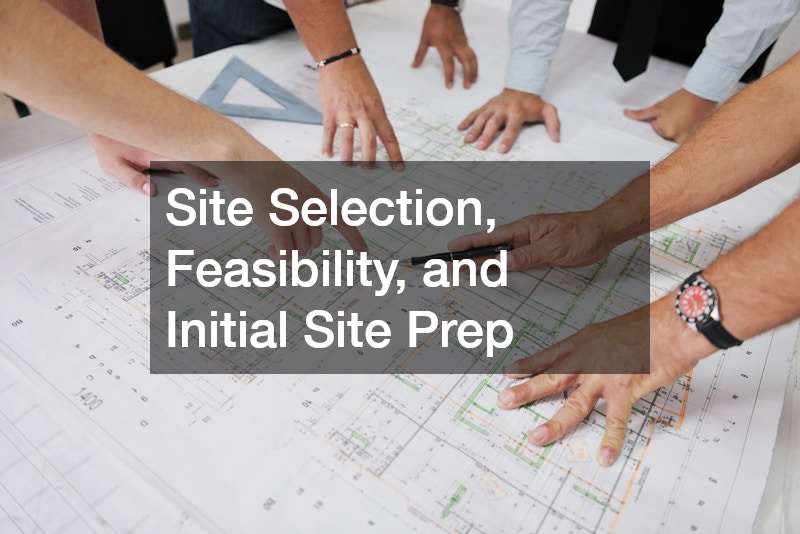
Site Selection, Feasibility, and Initial Site Prep
How to Evaluate Raw Land Beyond the Purchase Price
The foundation of a successful ground-up build starts long before any concrete is poured. Selecting the right parcel of land requires a deep dive into municipal regulations, environmental factors, and spatial logistics. You must look past the list price of a property and evaluate its true cost of development.
-
Zoning and Municipal Code Compliance: You must verify that your business operations align with local zoning laws. Check for specific setback requirements, which dictate how far your building must sit from property lines, as well as height restrictions and floor-area ratios. Navigating these codes early prevents costly delays or the need to petition for municipal variances later.
-
Geotechnical Engineering and Soil Testing: Never buy commercial land without a comprehensive soil analysis. A geotechnical engineer will drill test borings to assess the soil’s load-bearing capacity, moisture content, and bedrock depth. Poor soil quality can add six figures to your budget in unexpected foundation engineering.
-
Transforming the Landscape: Once the land is secured and permits are issued, physical work begins with lot clearing to remove trees, dense vegetation, boulders, and existing debris. This step is critical not just for creating a blank slate, but for establishing proper site grading, ensuring that rainwater flows away from your future structure rather than pooling around it.
Establishing a Bulletproof Contractor Vetting Process
Your choice of construction partners will make or break your project. While price is always a factor, your primary focus should be on specialized expertise and historical performance.
-
Asset Class Alignment: Look for a general contractor who explicitly demonstrates a successful track record in building your specific asset class. An office building requires vastly different engineering, mechanical systems, and interior finishes than a medical clinic or a tech flex-space.
-
Securing Subcontractor Expertise: A general contractor is only as good as the specialized teams they hire. For the critical early structural work, you must ensure they partner with a top-tier commercial concrete contractor. This specialized team is responsible for engineering the structural footings, slab-on-grade floors, and structural retaining walls that support the entire weight of your building. Ensuring this phase is handled by proven professionals prevents future structural settling and slab cracking.
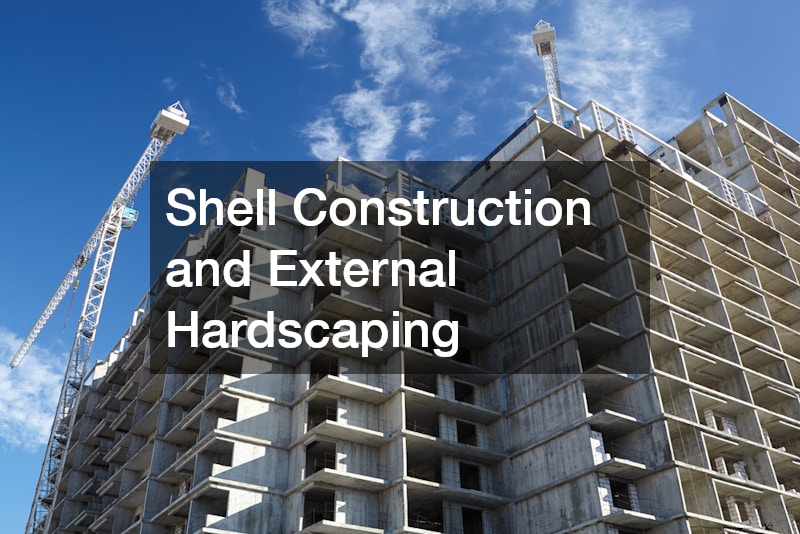
Shell Construction and External Hardscaping
Protecting Your Asset From Overhead to Underfoot
With the foundation set and the framing underway, the focus shifts to enclosing the building envelope. This phase is all about sealing the structure against weather elements and optimizing its long-term energy performance.
-
Weatherproofing the Envelope: The exterior walls and roof form the primary defense system for your interior investments. During this stage, high-performance vapor barriers and continuous insulation are installed to prevent moisture infiltration and thermal bridging.
-
Investing in Overhead Protection: Your choice of roofing material directly impacts your operational bottom line for the next few decades. It is vital to hire an experienced commercial roofing company to install a highly durable, energy-efficient system. Whether you opt for a Thermoplastic Polyolefin (TPO) membrane to reflect solar heat or an Ethylene Propylene Diene Terpolymer (EPDM) rubber system for extreme climate durability, a professional installation protects your interior fit-outs from devastating water leaks and lowers your monthly utility costs.
Maximizing Traffic Flow and Safety in Your Commercial Layout
The exterior experience of your headquarters speaks volumes to your clients, partners, and employees. Your parking facility and perimeter traffic flow must be engineered with the same precision as your building interior.
-
Structural Integrity of Traffic Surfaces: A parking lot is subject to massive daily stress from heavy vehicles and shifting weather conditions. Achieving a durable finish requires meticulous subgrade compaction and a robust gravel base before executing the parking lot paving phase. Skimping on the subgrade thickness or using inferior asphalt mixes leads to premature asphalt fatigue, alligator cracking, and expensive alligator-skin patterns within just a few years.
-
Maximizing Safety and Compliance: A functional parking layout must protect pedestrians and optimize traffic flow. Once the asphalt cures, applying crisp parking lot striping is essential. This includes clearly marking fire lanes, directional arrows, loading zones, and the precise number of accessible parking stalls required to maintain strict compliance with local accessibility laws.
Infrastructure and Interior Fit-Outs
Designing an Internal Power Infrastructure That Scales
Once the building shell is entirely enclosed, work transitions indoors to install the complex mechanical, electrical, and plumbing infrastructure. This represents the central nervous system of your headquarters.
-
Calculating Future Load Demands: Do not design your electrical grid based solely on your current operational needs. Factor in a thirty percent growth buffer to handle future server rooms, specialized manufacturing equipment, or electric vehicle charging stations in the parking lot.
-
Precision Engineering of Your Power Grid: Commercial buildings feature highly intricate electrical distribution networks that require a licensed commercial electrical contractor to execute safely. This specialized team handles the installation of heavy-duty transformers, main distribution panels, dedicated data circuits, and emergency backup generator systems. They will ensure your power grid is fully balanced, preventing electrical surges that could compromise your company’s sensitive digital hardware.
Brand Integration and Curating the Visual Experience
With the core infrastructure hidden behind drywall, the creative phase of your project begins. This is where your brand identity is woven directly into the physical architecture of the workspace.
-
Architectural Wayfinding and Visual Identity: External branding acts as your silent ambassador to the public. You need to leverage professional commercial sign services to design, build, and install high-impact exterior monument signs and illuminated building logos. These teams understand how to navigate strict municipal sign ordinances regarding brightness, sizing, and setback restrictions, ensuring your brand stands out legally and professionally.
-
Optimizing the Interior Workspace Zoning: The interior floor plan should balance open, collaborative zones with private, quiet spaces. Focus on installing acoustic paneled meeting rooms, ergonomic breakout spaces, and natural lighting channels that improve employee wellness and day-to-day focus.
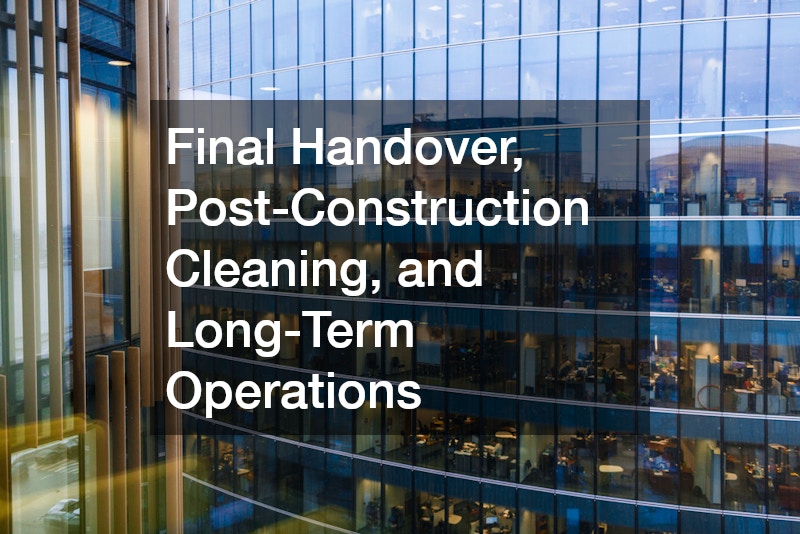
Final Handover, Post-Construction Cleaning, and Long-Term Operations
Restoring the Grand Opening Shine After Construction Dust Settles
As the heavy construction equipment rolls away, the building is often covered in a dense layer of dust, residual adhesive, and masonry film. Before your team can move in, a thorough, multi-stage deep clean is required.
-
Stripping Away Exterior Construction Debris: The exterior facade, sidewalks, and entryways often bear the brunt of construction runoff, showing mortar stains, muddy tire tracks, and paint overspray. Utilizing professional commercial pressure washing services is the most efficient way to blast away these stubborn residues, restoring the pristine appearance of your brick, stone, or concrete surfaces.
-
Achieving Absolute Clarity on the Enclosure: Expansive glass facades and large windows are a staple of modern corporate architecture, but they collect a heavy film of silicone, dust, and stickers during installation. Booking an industrial commercial window cleaning specialist ensures that all glass surfaces are scraped safely, washed, and squeegeed without scratching, allowing natural light to flood your new workspace flawlessly.
Transitioning from Construction to Daily Facility Management
The final step of your ground-up journey is transitioning the building from a chaotic construction zone into a smoothly operating corporate asset.
-
Executing a Rigorous Punch List: Walk through every square foot of the building alongside your architect and general contractor. Test every light switch, examine paint finishes, inspect HVAC airflow, and verify that every door latch works perfectly. Do not release the final retention payment until every single deficiency on this punch list is completely resolved.
-
Protecting Your Real Estate Investment: Running a commercial building requires ongoing maintenance, preventive servicing, and regulatory compliance tracking. Many business owners find that managing these operational burdens internally distracts from their core corporate goals. Contracting a reputable property management company to oversee daily facility maintenance, vendor contracts, HVAC servicing, and landscape upkeep ensures that your new headquarters remains in peak condition while allowing your executive leadership team to focus entirely on scaling the business.
Technology Integration and Digital Infrastructure
Engineering a Low-Voltage Network for Seamless Connectivity
A modern headquarters requires a robust digital foundation to match its physical architecture. Waiting until the drywall is finished to think about data cables is a critical mistake that leads to messy retrofits and exposed wiring. High-performing organizations plan their low-voltage networks concurrently with their main utilities.
-
Structured Cabling and Server Rooms: Designate a centralized, climate-controlled Main Distribution Frame (MDF) room. Run Category 6A or fiber-optic cabling in structured trays above the ceilings to support high-speed data transmission, VoIP phones, and networked security systems.
-
Ubiquitous Wireless Coverage: Conduct a predictive wireless site survey during the design phase. This ensures that wireless access points are strategically positioned throughout the building to eliminate dead zones, allowing employees to move seamlessly from their desks to collaborative lounges without losing connectivity.
Implementing Next-Generation Security and Access Control
Protecting your physical assets, intellectual property, and personnel requires a layered, intelligent security strategy built directly into the facility’s design.
-
Biometric and Smart Access Control: Replace traditional brass keys with cloud-based access control systems. Utilize encrypted keycards, smartphone credentials, or biometric scanners at all exterior perimeters, server rooms, and executive suites to track building occupancy and restrict sensitive areas.
-
Intelligent IP Video Surveillance: Install high-definition IP cameras at all entry points, loading docks, and parking perimeters. Integrating these cameras with artificial intelligence allows for automated perimeter crossing alerts and license plate recognition, giving your security team real-time situational awareness.
Sustainability and Future-Proofing
Harnessing Smart Building Automation and Energy Management
Building from the ground up gives you a rare opportunity to minimize your carbon footprint and slash ongoing operational overhead by investing in intelligent building systems.
-
Integrated Building Management Systems (BMS): A centralized BMS monitors and controls your HVAC, lighting, and ventilation systems in real time. By utilizing occupancy sensors and scheduled setback timers, the system ensures you are never wasting money heating, cooling, or lighting empty conference rooms or vacant floors over the weekend.
-
Smart Lighting Controls and Daylight Harvesting: Install automated window treatments and dimmable LED fixtures that adjust their output based on the amount of natural sunlight entering the building. This process, known as daylight harvesting, significantly reduces electrical strain during peak daytime hours.
Planning for Long-Term Scalability and Adaptive Reuse
Your business will inevitably evolve over the next decade. A truly successful headquarters is engineered to adapt to changing headcounts, shifting department structures, and new operational models without requiring a full structural remodel.
-
Flexible Architectural Floor Plates: Utilize column-free structural designs and modular demountable wall systems where possible. This allows you to easily reconfigure an open-concept cubicle floor into private offices or collaborative labs in a weekend, rather than undergoing a multi-week demolition project.
-
Scalable Mechanical Infrastructure: Ensure that your plumbing, ventilation, and structural load pathways are designed with expansion in mind. Leaving designated knockouts in concrete slabs and excess capacity in your mechanical shafts makes adding a future mezzanine or extending a wing of the building a straightforward construction task rather than an engineering nightmare.
Building your company headquarters from the ground up is undeniably an intense journey filled with thousands of micro-decisions. It demands a significant investment of capital, time, and leadership energy. Yet, the long-term rewards of this endeavor are unparalleled. By executing a ground-up build, you eliminate the compromises of leased spaces, build substantial long-term corporate equity, and create a physical manifestation of your company culture.
The secret to crossing the finish line successfully lies in the strength of your preparation and the quality of your partnerships. When you approach each phase with a commitment to thorough vetting, strict compliance, and future-proof design, you minimize operational risks and maximize your financial return. As you take your initial steps toward development, focus on assembling your core advisory team of brokers, architects, and legal counsel. With a clear strategy and the right experts by your side, your dream of a custom-built corporate home will seamlessly transform into a powerful operational reality.